_edited.png)
THE QUINCECARE QUAGMIRE
- Ayomide "Mide" Alabi
- May 12, 2025
- 3 min read

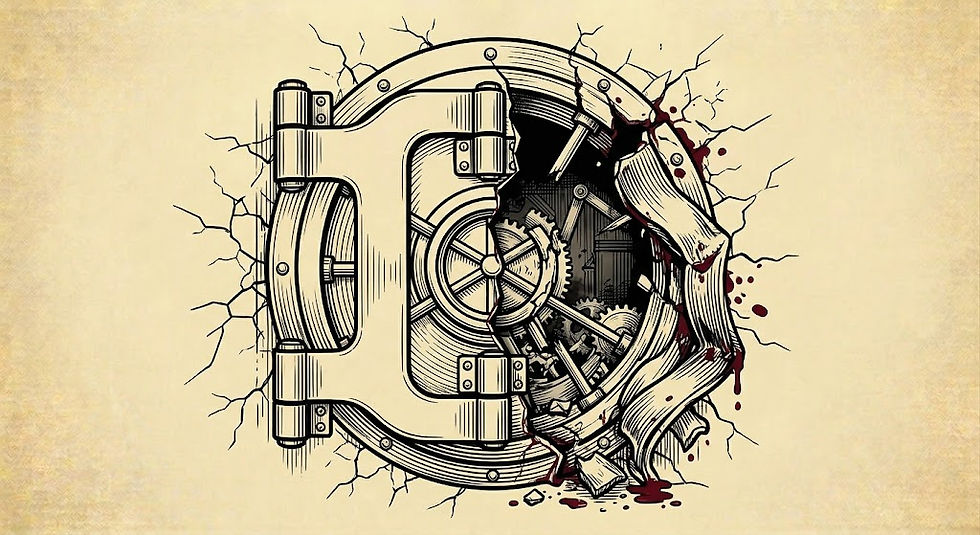
Today, let’s talk about something that doesn’t get nearly enough attention in conversations about banking in Nigeria: The Quincecare duty and why it matters for both you and the banks you trust with your money.
For any reader who’s ever watched Family Guy, you probably are acquainted with the word “Quagmire.” The word typically describes a difficult, messy situation where every move seems to drag you deeper into trouble. And in the world of banking, the Quincecare Quagmire is exactly that: a murky space where a bank’s legal responsibility, customer trust, and ethical expectations collide.
What Is the Quincecare Duty?
The duty comes from an old English case, Barclays Bank v. Quincecare Ltd. (1992).
In this case, a company called Quincecare Ltd. had a bank account with Barclays Bank. The chairman of Quincecare, who was a director at the time, gave instructions to the bank to transfer a large sum of money out of the company’s account. Unknown to the bank, this chairman was committing fraud against his own company.
The money was transferred, and when the fraud was eventually discovered, the company, now under new management, sued Barclays Bank. Their argument was simple. “You, the bank, should have noticed something was off. You should have refused to carry out the instructions because they were suspicious.”
The court agreed in principle, laying down what is now known as the Quincecare Duty, where it held that banks owe a duty of care to their customers not to execute payment instructions if they have reasonable grounds to suspect that the instruction might be fraudulent. In plain terms, a bank isn’t supposed to just act like an ATM. If something feels off, they should pause, investigate, and possibly refuse to act even if it’s your own account giving the instruction.
That’s the core of the Quincecare duty: protect the customer, even from themselves.
So Where Exactly Is the Quagmire?
Here’s where things get sticky.
On one side, banks have a contractual obligation to obey your instructions. It’s your money. You should be able to do what you want with it. But on the other side, they owe you a duty to stop you when fraud is suspected.
Now imagine the ethical headache:
What if a legitimate transaction seems suspicious?
What if the suspicion is weak, but delaying it could cause you harm?
What if they ignore a red flag and it turns out you’ve been scammed?
It’s a no-win situation sometimes. That’s the quagmire. Banks find themselves caught between being accused of acting too fast or being blamed for acting too slowly.
I actually had a run-in with this kind of situation a while back. Last year, a very popular new-age bank in Nigeria flagged one of my transactions as “unusual” and put a hold on my account without warning. Now, I understood where they were coming from, seeing as it was a large payment to a new beneficiary, which, I suppose, from their end, seemed dodgy.
The issue was it wasn’t fraud. It was a legitimate transaction for work I had just concluded, and the delay almost cost me an opportunity because the recipient needed to help me process something fairly urgently, and the transaction query did not help at all.
This is the Quincecare quagmire in action: Was the bank protecting me or interfering with my affairs? If the transaction had actually been some sort of scam, I would have praised them. But because it wasn’t, I was frustrated.
And in those moments, you realize how complicated this duty can be in practice.
Why Should I Care?
In Nigeria, cases of unauthorized account debits, social engineering scams, and insider fraud are everywhere. Yet, the idea that banks have a duty to stop fraudulent transactions, not just for corporate accounts but for regular people like you and me, isn’t something we hear often.
For the average Nigerian, the quagmire is this: Should your bank have seen the red flags before that money left your account? Should they have done more? Could they be held responsible?
Right now, unless it’s gross negligence or outright fraud, customers are often left on their own. But Quincecare suggests that maybe, just maybe, Nigerian banks should be stepping up more actively.
Bottom Line
Beyond legal duties, there’s a human side to this. Should financial institutions be passive observers or active defenders when something looks off?
In practice, banks walk a tightrope, seeking to protect the customer without being accused of overreach. Delay a transfer and risk being called controlling, and perhaps get yourself a spot on the next VDM video. Approve it blindly and risk facilitating fraud.
That’s the quagmire. And for a banking system like ours, where trust is shaky and dealing with cyber fraud and scams is a daily struggle, I think it’s a conversation worth having.



Comments