_edited.png)
Who Owns The Oil?

Attorney-General of the Federation v. Attorney-General of Abia State & 35 Ors. (S.C. 28/2001) [2002] NGSC 10
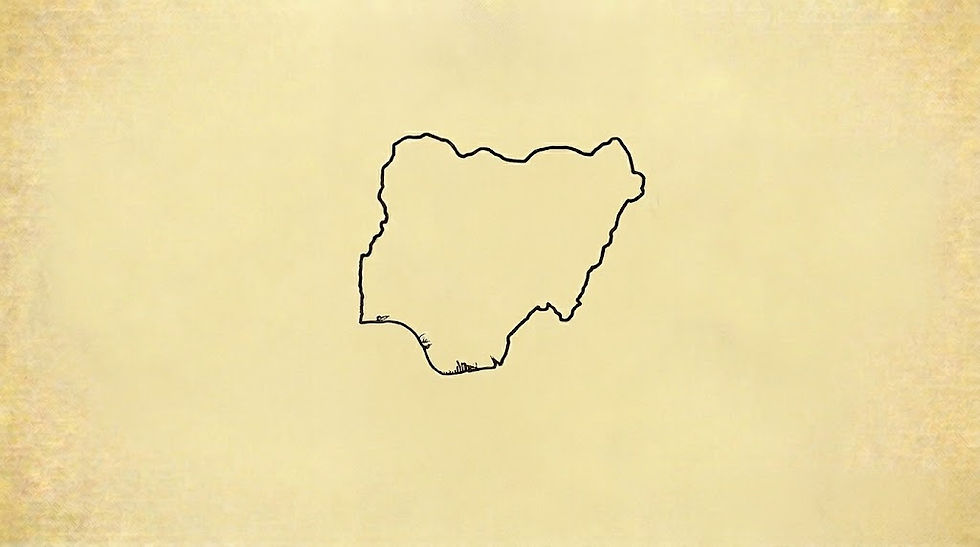
Not unlike a lot of countries, Nigeria runs on oil. Everyone knows that by now. But a question that took three years, all 36 state governments, a seven-member Supreme Court panel, and one famously acrimonious bench to resolve is: Whose oil is it?
That was the question at the heart of this case, and the answer the court gave in April 2002 still shapes how money moves in this country today.
The Setup
Nigeria’s 1999 Constitution, under section 162(2), entrenches what is known as the derivation principle. The idea is straightforward enough: states that produce natural resources are entitled to receive back at least 13% of the revenue derived from those resources before what remains goes into the Federation Account for general distribution. In theory, this is meant to compensate oil-producing communities for bearing the environmental and infrastructural costs of extraction. In practice, it means the difference between billions of naira and nothing, depending on how you draw the lines.
The dispute turned on exactly that — the lines. Specifically, where does a littoral state end and the sea begin?
This sits alongside Section 44(3) of the Constitution, which vests the entire property and control of all minerals, mineral oils, and natural gas in the Government of the Federation.
Read together, the provisions set up a structural tension between centralized ownership and decentralized compensation.
The eight states that sit along Nigeria’s coastline—Akwa Ibom, Bayelsa, Cross River, Delta, Lagos, Ogun, Ondo, and Rivers, had a straightforward position. Their territory, they argued, extended beyond the shoreline and into the territorial waters, the continental shelf, and the exclusive economic zone. Oil wells drilled offshore, they said, were wells drilled from their territory, and the 13% derivation formula should apply to that revenue accordingly.
The federal government disagreed. Its position was that the southern boundary of each littoral state was the low-water mark, which is the edge of the land at the coast, full stop. Per their argument, everything beyond that, including the territorial waters and the continental shelf, belonged to the federation as a whole.
If a significant share of Nigeria’s oil revenue—often estimated at around 40%, came from offshore wells, then under the federal government’s reading, none of it triggered the derivation formula. None of it triggered the derivation formula for the littoral states as of right. Instead, it flowed into the Federation Account for general distribution among all states.
The numbers at stake were enormous.
At its core, the dispute exposed a deeper tension in Nigeria’s constitutional design: between a system that vests control of natural resources in the federation and one that promises compensatory revenue to producing states through the derivation principle. The case would force the court to choose, implicitly, between territorial formalism and fiscal equity.
In Court
The Federal Government brought the case directly to the Supreme Court, which has original jurisdiction under Section 232(1) of the Constitution over disputes between the federation and a state or between states. The defendants were all 36 state attorneys general, though the real fight was between the federal government, backed by the non-oil-producing states, and the eight littoral states backed against it.
Some defendants raised preliminary objections that there was no concrete dispute, that the court lacked jurisdiction, and that parties were misjoined. The court dismissed all of them in an earlier ruling in July 2001, and the substantive hearing proceeded.
Only six defendants filed affidavit evidence. The others, including the plaintiff, did not. The case was argued almost entirely through briefs and oral submissions.
The panel comprised seven justices of the Supreme Court, presided over by Chief Justice Muhammadu Lawal Uwais.
The bench was not unanimous, as there was a lone dissent by Sylvester Umaru Onu, who favored a more purposive reading of the derivation principle and placed greater weight on compensating producing states rather than adhering strictly to territorial boundaries.
The Decision
The court delivered judgment on April 5, 2002, and ruled in favor of the federal government.
The seaward boundary of a littoral state, the court held, is the low-water mark of its land surface, or in the case of states like Cross River with archipelagic features, the seaward limits of its inland waters. Nothing beyond that—no territorial sea, no continental shelf, and no exclusive economic zone, forms part of the state’s territory for the purpose of calculating derivation revenue.
The court’s reasoning pulled from several directions: common law principles on riparian boundaries, the colonial legal history of Nigeria’s coastal territories going back to the Letters Patent of 1886 and the Orders in Council, and the framework of international law as codified in UNCLOS. The historical argument was particularly pointed; Nigeria’s southern regions, the court found, had been legally defined since British colonial rule as sharing a boundary with the sea, which meant the sea could not simultaneously be part of their territory.
On the question of a 1992 military decree that had expressly abolished the onshore/offshore dichotomy, the court held that the decree could only operate insofar as it was consistent with the 1999 Constitution, and where there was any inconsistency, the Constitution prevailed.
The practical effect was stark: oil revenue from offshore wells, which was roughly 40% of total oil income at the time, would not count toward the derivation formula. The littoral states would receive their 13% only on onshore production.
What Happened After
The judgment did not end the conversation. As a matter of fact, one could say that it just subjected it to further controversy.
Akwa Ibom and Ondo were the states hit hardest by the ruling, and the federal government moved quickly with emergency subsidies of a reported ₦600 million monthly to Akwa Ibom and ₦200 million to Ondo as interim relief. But those were political bandages, not a legal fix.
The fix came through legislation. After some back and forth between the executive and the National Assembly over the precise scope, President Obasanjo signed the Allocation of Revenue (Abolition of Dichotomy in the Application of the Principle of Derivation) Act in 2004. The Act is elegantly brief in its ambition. Section 1(1) provides that the 200-meter water depth isobath contiguous to a state shall be deemed to be part of that state for revenue computation purposes, and section 1(2) states plainly that it is immaterial whether revenue derives from onshore or offshore natural resources.
In two subsections, the National Assembly reversed the practical effect of the Supreme Court judgment without touching the judgment itself—the court had even flagged the path in its ruling, with one justice noting that the court had no legislative powers and that only the legislature could rewrite the law if it wished.
Importantly, the Act did not alter the constitutional position on territorial ownership of offshore resources. It operated instead as a fiscal mechanism, deeming certain offshore production attributable to states solely for the purpose of revenue computation.
Justice Kutigi’s observation turned out to be an instruction.
Why It Still Matters
The 2004 Act resolved the immediate fiscal crisis, but the underlying tension has never fully dissolved. The questions of who owns what in Nigerian federalism, how much autonomy states have over resources within or near their borders, how derivation is calculated, and whether the current revenue sharing formula actually compensates producing communities for what they bear remain some of the most contested questions in Nigerian governance.
In practice, this has required continuous technical intervention: hydrographic surveys, boundary delineation exercises, and determinations by federal agencies to attribute offshore wells to particular states for derivation purposes.
As recently as February 2026, Akwa Ibom and Cross River were litigating the ownership of 76 offshore oil wells, with both states citing their Supreme Court entitlements in the same breath as invoking boundary commission determinations. The machinery the 2002 case set in motion—the need for technical boundary delineation, hydrographic data, and federal agency arbitration on maritime boundaries, is still running.
The resource control question has also never fully left the political vocabulary of the Niger Delta. The agitations, the pipeline vandalism, the long argument about whether the 13% derivation formula is adequate compensation for decades of environmental damage — in all honesty, none of it began with this case, and none of it ended with it. The case simply gave the argument a legal vocabulary and a federal imprimatur.
A 7-member Supreme Court panel settled the legal question in April 2002. Whether the political question is settled is a different matter entirely, and the answer, in 2026, is clearly no.



Comments